
The growing need for knowledge sharing
In an increasingly competitive business world, knowledge sharing has become a critical issue for companies. Faster technological change, more retirements and the constant need to refresh skills all call for smooth knowledge transfer. Sharing is not just about exchanging information between individuals: it means spreading the skills, best practices and know-how that make up the organization’s collective intelligence.
Knowledge sharing also drives productivity. A company where knowledge flows freely is more responsive, and its people are better equipped to solve problems, innovate and contribute to growth. Yet despite how widely its importance is recognized, many companies still hit roadblocks that limit their ability to build on internal knowledge. This article looks at those obstacles, the benefits of successful collaborative sharing, and how tools like Shiroo can help.
What holds back knowledge sharing
Several obstacles, organizational, cultural or technological, can limit knowledge sharing at work. Here are the most common.
- Knowledge hoarding: some employees see their knowledge as a personal asset they are reluctant to share, for fear of losing their importance or their edge. This usually comes from a culture where competition between coworkers outweighs collaboration.
- Lack of time: often overloaded, employees rarely have time to document and share what they know. Sharing becomes one more task that takes time and energy, two resources already in short supply.
- Scattered teams: in large companies or those with several sites, passing knowledge between departments or between people in different locations is harder. The lack of suitable tools makes it worse.
- Lack of recognition: if knowledge sharing is not recognized and valued, employees will be less inclined to invest in it.
- An aging workforce: when experienced employees retire, a company can lose a huge amount of knowledge if nothing was put in place to capture it and pass it on to younger people.
These obstacles can seriously hamper knowledge sharing, and with it productivity. But once they are identified, the right organizational and technology solutions can overcome them.
The benefits of collaborative sharing for teams
Encouraging knowledge sharing pays off for individuals and for the company as a whole.
- Higher productivity: when information and knowledge are easy to reach, people solve problems faster and make better-informed decisions. They no longer waste time looking for what others already know. A well-informed team performs better and adapts faster to new situations.
- A stronger innovation culture: sharing between people from different departments or with different expertise sparks new ideas. When everyone brings their perspective and experience, the synergy drives innovation.
- Better decisions: with access to a broader range of knowledge, teams make more informed decisions based on collective expertise rather than individual hunches, and fewer mistakes come from missing information.
- A tighter team: sharing what you know builds trust, collaboration and a sense of belonging. Teams work better together, including when things get tough.
- Knowledge that lasts: knowledge that is actively shared and documented is less vulnerable to departures and staff changes. The company’s processes keep running, even with high turnover.
The result is a more agile, more resilient company that is better prepared for what comes next. To get the full benefit, you need tools that make knowledge transfer easy.
How Shiroo makes knowledge transfer easier
Digital tools play a key role in knowledge sharing, especially when people are spread across several sites or departments. Shiroo stands out for how simply it captures, structures and shares knowledge.
Here is how Shiroo addresses the challenges of knowledge sharing:
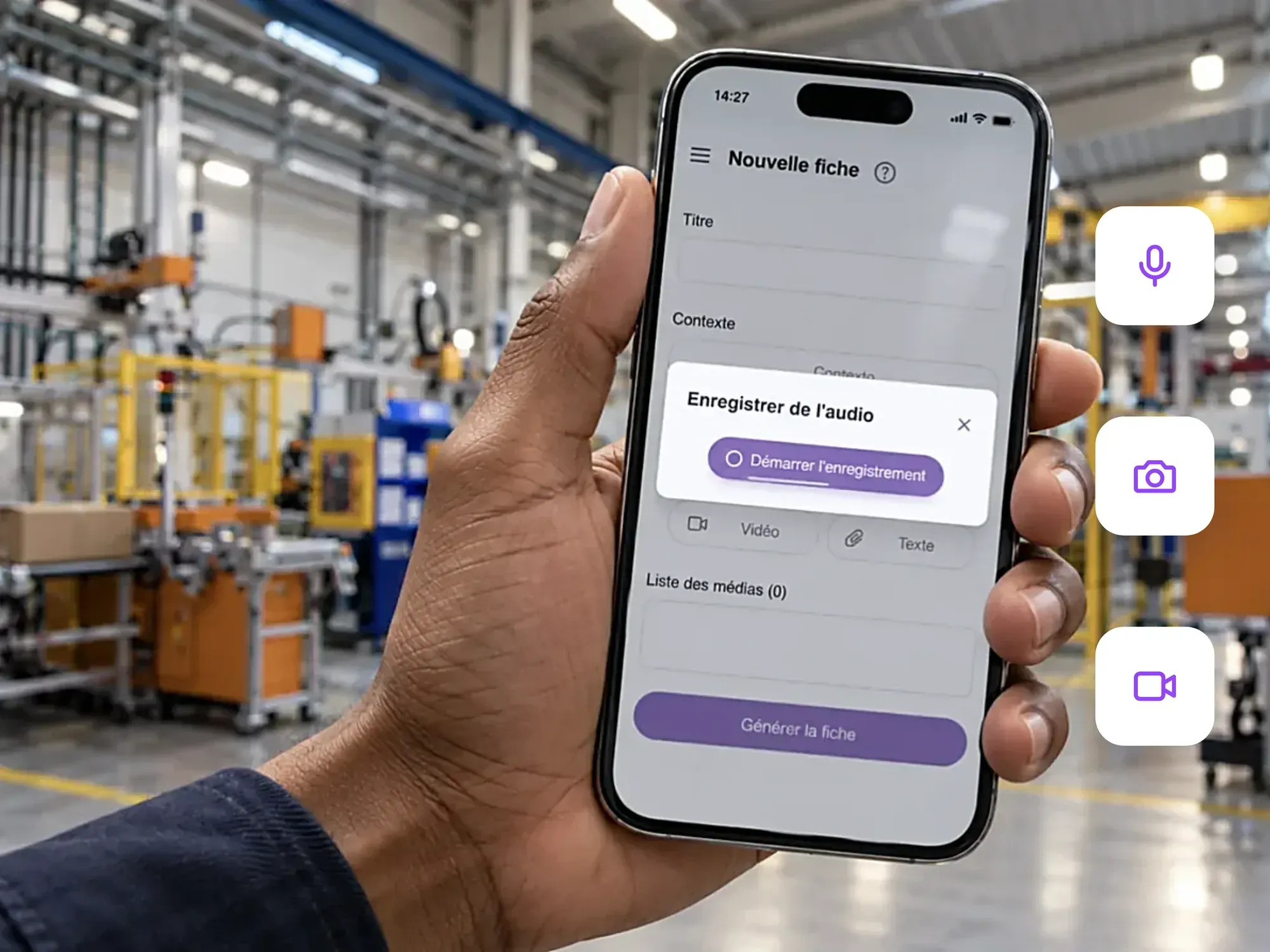
- Effortless capture: the employee explains the task out loud, takes a photo or films it on their phone. Sharing no longer requires writing time, which removes the first obstacle.
- Automatic structuring: Shiroo’s AI turns those explanations into clear, illustrated knowledge sheets. Knowledge that used to be tacit or poorly documented becomes explicit and ready for everyone to use.
- Reliable knowledge: every sheet is reviewed and approved by a subject-matter referent before it is published. Validation is also a way to recognize the people who share.
- Centralized information: procedures, technical guides, lessons learned and existing documents all sit in a single platform. Information is less scattered and key data is quick to reach.
- Access anywhere: on a phone, tablet or computer, people ask their question in their own words and get a sourced answer wherever they are. Distance between sites and departments stops being an obstacle.
Shiroo does more than centralize information: it makes every employee part of sharing and building the company’s knowledge.
Turning collaboration into a strategic asset
Knowledge sharing is a key driver of productivity and competitiveness. To make it truly effective, you have to remove what holds it back and put the right tools in place.
Solutions like Shiroo meet today’s knowledge management needs. By making knowledge sharing simple, they preserve the company’s intellectual capital, make teams more effective, encourage innovation and strengthen cohesion.
By turning collaboration into a strategic asset, companies give themselves the means to thrive in a constantly changing environment, where agility and innovation make the difference.